GECO - Feria virtual italiana de sostenibilidad

The Anthropocene, the era in which human civilisation expanded and outpaced all the others on earth, has brought about colossal changes on the planet. Only a fraction of the earth's surface is currently untouched by human action, and biodiversity is threatened by the increasing urbanisation of areas that were once safe habitats for a variety of wildlife species. Wildlife corridors are one of the most effective solutions to protect biodiversity, especially for those species that need to move periodically and whose routes are hampered by the expansion of man-made environments. In order to safeguard the rhythms of natural migration and expansion, wildlife corridors are designed to connect the natural starting points and destinations of such movements in order to benefit the affected ecosystems.
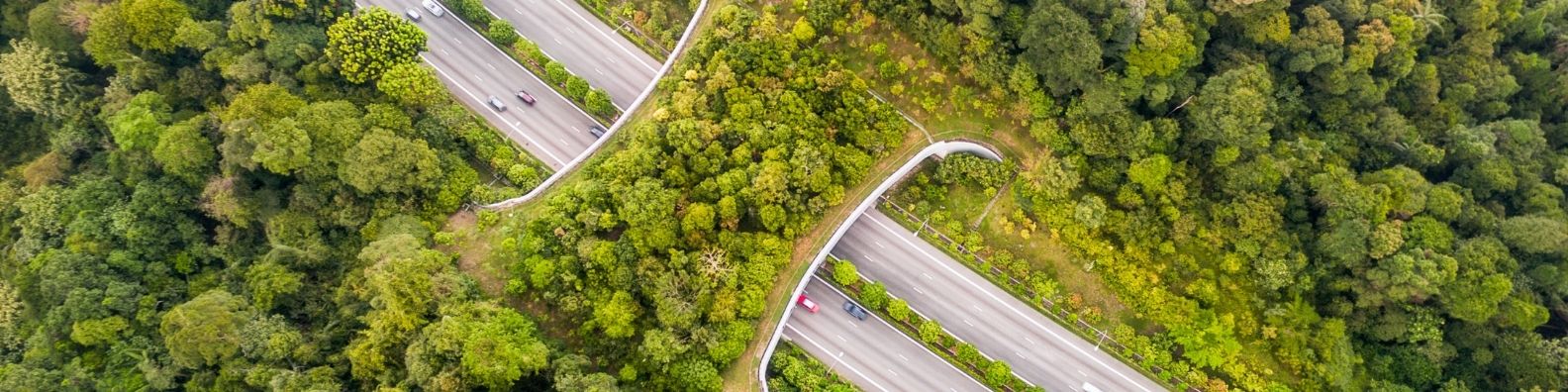
Wildlife not only needs to conserve its habitat, but it also requires areas large enough to ensure the sustainability of the whole ecosystem in which it naturally thrives. If a habitat is fragmented - for instance because roads or other infrastructures pass through it - the fact that the total area is vast does not necessarily mean that the animal species within it can survive. In order for an ecosystem to be maintained, its wildlife must be able to reproduce successfully and at the necessary rate and, once the population has grown, be able to spread unhampered so as to find a suitable living space and have access to the resources they need to survive and thrive. This is why habitat fragmentation is extremely dangerous. And it is also precisely why wildlife corridors were invented.
There are different types of wildlife corridors. Some occur naturally and depend on the terrain, such as with large forests or mountain ranges. Then there are man-made corridors, which are created by humans for the specific purpose of preserving biodiversity. A very basic example is that of the flyovers that are built across roads that pass through large swathes of protected land and that are intended to avoid collisions between animals and cars. This allows animals to spread within their habitat, which lays on both sides of the road in a wildlife park or a woodland area. Wildlife corridors can also be uninterrupted strips of natural landscape, uncontaminated by humans, which ensure continuity of habitat between two or more large areas in which a certain type of wildlife lives. Thanks to these corridors, different groups of animals can move around and occupy new territories, which is why wildlife corridors are also often created to repopulate areas where a particular species is in decline or no longer present.
Biodiversity and the preservation of ecosystems, as well as the positive effects that wildlife preservation policies can have on the development of eco-tourism, are among the topics that will be discussed at the second edition of GECO Expo, the virtual sustainability exhibition. If you want to know more, book and attend the event! Attendance is free.
Published on 15-10-2021


